Kitchen Drill
The Two-Thigh Test
Two chicken thighs, same salt, same pan. One gets salted the night before. About four dollars to taste exactly what a day of dry brining does.
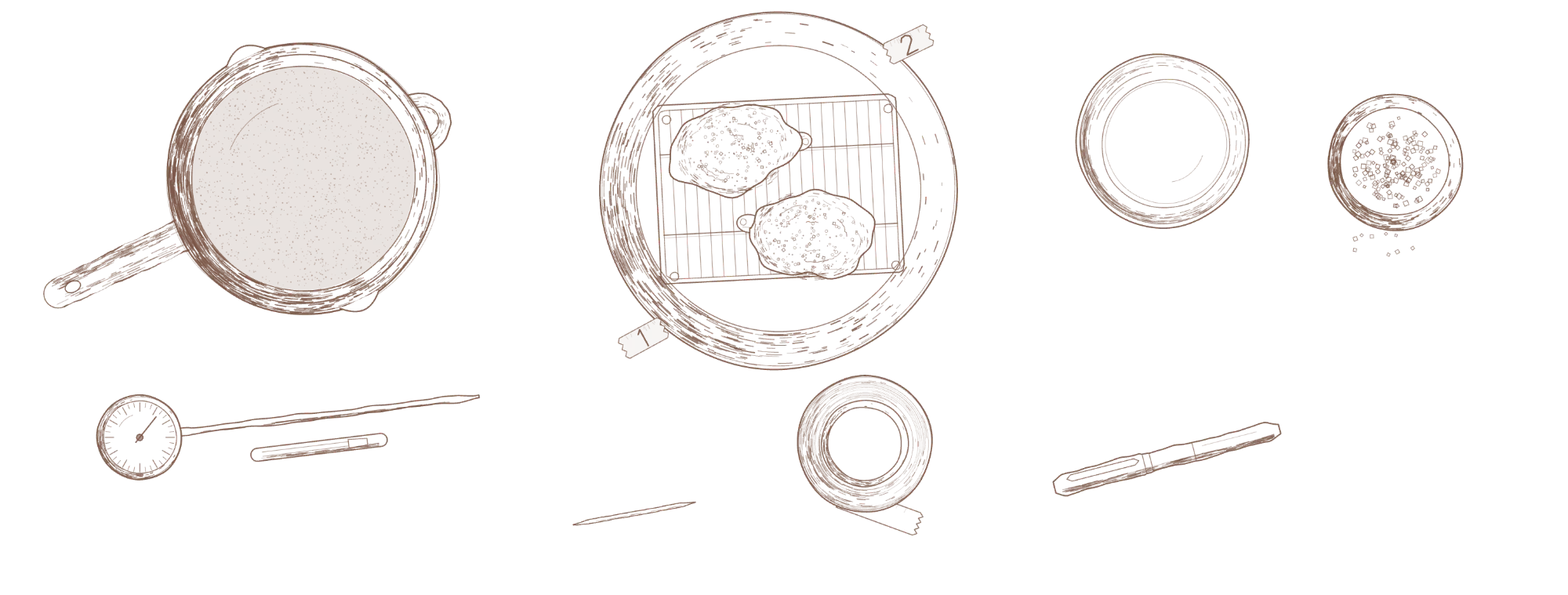
What you need
The drill
- 1
The night before (at least 12 hours ahead): put a strip of tape on opposite sides of the plate and label them 1 and 2. Pat thigh 1 very dry and salt it all over with 3/8 teaspoon Morton (1/4 plus 1/8; or a heaping 1/2 teaspoon Diamond Crystal). Set it skin-side up on the rack over the plate, on the 1 side, and refrigerate it uncovered on the bottom shelf, away from anything you'll eat raw.
- 2
The next day, heat the oven to 425°F. Pat thigh 2 dry and salt it exactly the same way, right before it goes in the pan. Stick the toothpick in thigh 1 so you can tell them apart.
- 3
Put both thighs skin-side down in the cold skillet, set it over medium heat, and cook without moving them until the skin is deep golden, 10 to 12 minutes.
- 4
Flip them and move the skillet to the oven. Roast until both read 175°F, 12 to 18 minutes. Rest them for 5 minutes.
- 5
Look first: compare the color of the skin, then tap each one with a fork and listen.
- 6
Cut each thigh through its thickest part. Taste a bite from the very center of each, with nothing else on it, sipping water in between. Then taste a piece of skin from each.
What to notice
The skin. Thigh 1, salted the day before, is browner and crackles when you tap it. Thigh 2, salted right before, is paler and soft in spots. That night uncovered in the fridge dried the surface out, and dry skin browns while wet skin steams. Same pan, same heat, same time: the only difference was a calendar.
The center. This is the real lesson. Thigh 1 is seasoned all the way through and tastes like chicken. Thigh 2 is salty on the outside and bland in the middle, because salt needs time to travel. It didn’t get any.
The juice. Thigh 1 is usually juicier too. Salt given enough time helps the meat hold onto its moisture while it cooks.
Level up
- The worst window. Add a third thigh salted exactly 15 minutes before it hits the pan. That’s when the salt has pulled moisture to the surface but hasn’t been reabsorbed yet, so you’re searing a wet thigh. Taste all three and you’ll never salt in that window again.
- Go bigger. Try it with two pork chops, salted a day apart. Same lesson, more meat.
- Weigh it. Weigh one thigh and salt it at exactly 1% of its weight. That’s the number the pros use.
Put it into practice
Cook it