Technique
Dry-Brined Cast-Iron Roast Chicken
Salt it a day early, roast it in a screaming-hot skillet, and get the crackly skin and juicy breast restaurants charge $38 for.
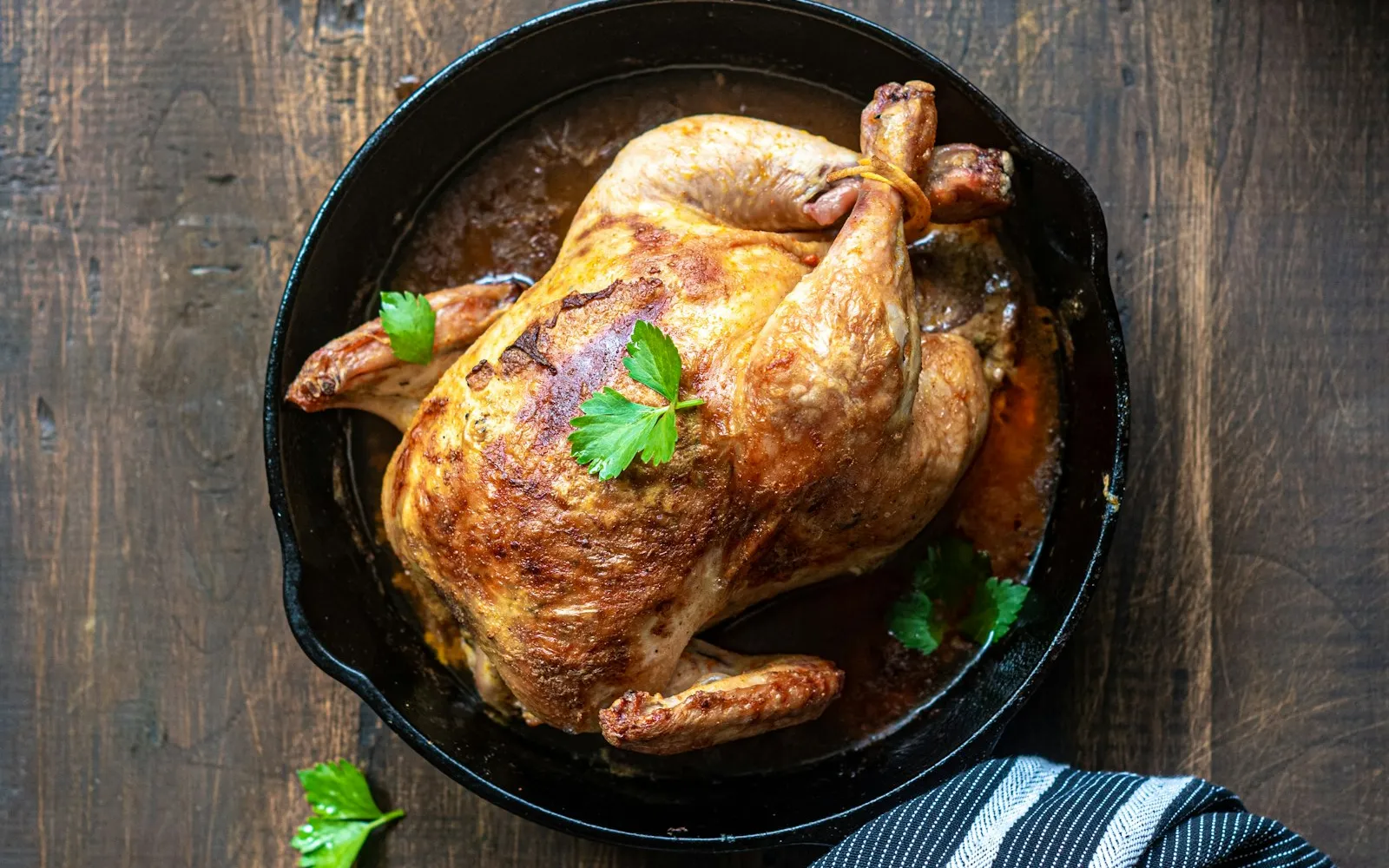
Photo by Claudio Schwarz on Unsplash
This is the first thing I’d teach you if you walked into my kitchen. Not because it’s fancy, but because it’s the recipe where you can feel technique doing the work. Same chicken, same oven, wildly different result, just because you salted it yesterday.
In culinary school, we roasted what felt like four hundred chickens. The ones that came out right all had two things in common: they were seasoned early, and they were cooked in something hot enough to make noise.
Why a cast-iron skillet
A preheated skillet hits the legs and thighs with direct heat from the bottom while the oven handles the top. Dark meat needs to get hotter than white meat, so this head start is how you avoid the classic problem of perfect thighs and sawdust breast.
The handle thing
When the skillet comes out of a 425°F oven, put a towel over the handle immediately. Every line cook has grabbed a hot handle exactly once. Let this paragraph be your once.
What to do with leftovers
Pick the meat off the bones the same night (it’s easiest while warm), then throw the carcass in a pot with water, an onion, and whatever sad celery you own. You just made stock. You’re basically a professional now.
Ingredients
For the chicken
For the pan sauce
How to make it
- 1
One day ahead: pat the chicken very dry with paper towels, inside and out. Season it all over (including the cavity) with the salt. Set it on a rack over a plate and refrigerate, uncovered, for 12 to 48 hours.
- 2
Pull the chicken out of the fridge 45 minutes before cooking. Put a 12-inch cast-iron skillet in the oven and heat the oven to 425°F.
- 3
Stuff the cavity with one lemon half, the garlic, and the thyme. Season the outside with pepper. Do not rinse off the salt. Do not add oil. The skin is ready exactly as it is.
- 4
Carefully lay the chicken breast-side up in the hot skillet. You should hear the legs sizzle; that head start is how the thighs finish at the same time as the breast.
- 5
Roast 50 to 65 minutes, until the thickest part of the breast reads 155°F and the thigh reads at least 175°F on an instant-read thermometer.
- 6
Move the chicken to a cutting board and rest it for 15 minutes. It will climb to 165°F on its own. Immediately drape a dry towel over the skillet handle.
- 7
Pour off all but about 1 tablespoon of fat. Set the skillet over medium heat, add the stock, and scrape up every browned bit. Simmer until reduced by half, about 3 minutes.
- 8
Take the skillet off the heat. Squeeze in the remaining lemon half and swirl in the cold butter until glossy. Carve the chicken, pour the board juices into the sauce, and serve.
Reviews