Kitchen Drill
The Squeeze Test
One pot of something rich, four little bowls, salt in one and acid in the rest. Twenty-five minutes to learn the difference between bland and flat.
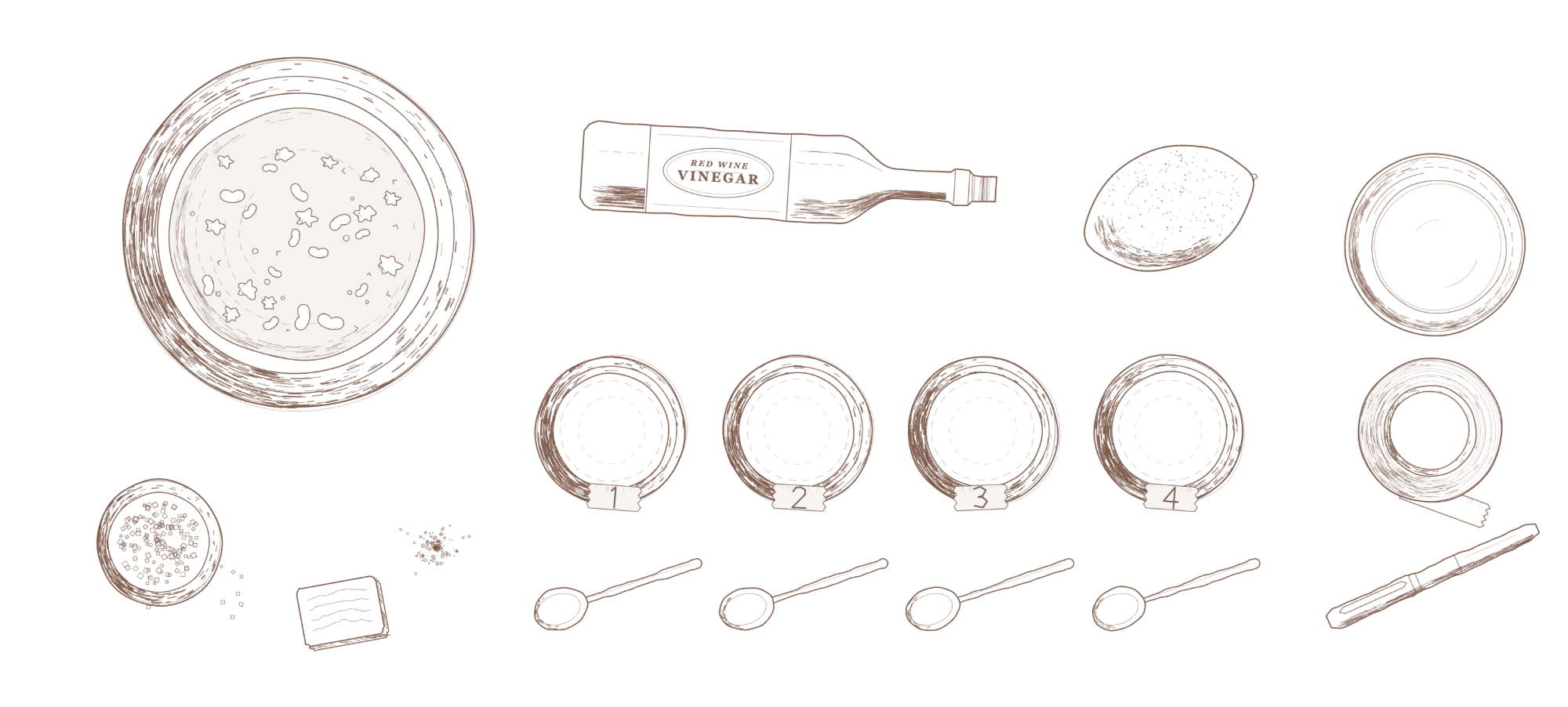
What you need
The drill
- 1
Warm the dish in a pan until it's hot. Taste it, then write one honest word about it on a strip of tape. "Fine" counts. So does "beige."
- 2
Divide it among the four bowls, about 1/3 cup each. Label them with tape: Plain, Salt, Lemon, Vinegar.
- 3
Leave Plain alone. Add a small pinch of salt to Salt, 1/4 teaspoon lemon juice to Lemon, and 1/4 teaspoon vinegar to Vinegar. Stir each well.
- 4
Taste Plain, then Salt. Back to Plain, then Lemon. Back to Plain, then Vinegar. Plain is your control, so return to it every time and sip water in between.
- 5
Now taste Lemon and Vinegar side by side. Pick the one that suits this particular dish.
- 6
Grate a little lemon zest over your favorite bowl and taste it again.
- 7
Rescue round: add another 1/2 teaspoon lemon juice to the Lemon bowl so it's clearly too sharp. Taste it. Stir in the butter, taste, then the pinch of sugar, and taste again.
What to notice
The Salt bowl gets louder but keeps the same shape. If it tastes saltier without tasting any brighter, that’s your diagnosis: the dish was never short on salt. It was flat.
The Lemon and Vinegar bowls change shape. Rich food stops sitting on your tongue like a heavy coat, the edges sharpen, and flavors you couldn’t pick out in Plain show up. That lift is what “it needs something” usually means.
Lemon versus Vinegar is a lesson in matching. Lemon reads bright and clean. Vinegar reads deeper and rounder. Neither is right in general; one is right for this dish, and now you know how to choose instead of guessing.
The zest adds perfume without adding sourness. Same lemon, different job.
The rescue round is the confidence builder. Too much acid isn’t a ruined dinner; fat and a little sugar pull it right back. Once you know you can recover, you’ll season with a lot less fear.
Level up
- Go blind. Have someone shuffle the bowls and see if you can name salt versus acid by taste alone.
- Try a third acid. Rice vinegar, lime, or a splash of pickle juice. Notice how each one changes the personality of the dish.
- Run the two-question rule at dinner tonight. Before you reach for the salt shaker, ask whether it needs salt or needs acid. Then test one spoonful before you commit the whole pot.
Put it into practice
Cook it