Guide
Fond: The Foundation to Endless Pan Sauces
Those brown bits stuck to your pan are a free sauce waiting to happen. Seven steps, and one formula, for restaurant pan sauces any night.
Early in my training, I watched a dishwasher take a pan straight off the stove, still crusted with dark, glossy bits from a batch of pork chops, and blast it clean under the sprayer. The sous chef made a sound I’ve only otherwise heard from an injured animal. He didn’t yell. He just moaned very quietly, “That was the sauce.” And then he went outside for a cigarette and a good cry.
That brown, crusty layer stuck to the pan after you sear something has a name: fond. It’s French for “base” or “foundation,” which tells you exactly how the French feel about it. It’s concentrated, caramelized flavor that you made for free while cooking something else. Most people scrub it down the drain. Those people are wrong, and today they stop.
1. Make good fond to begin with
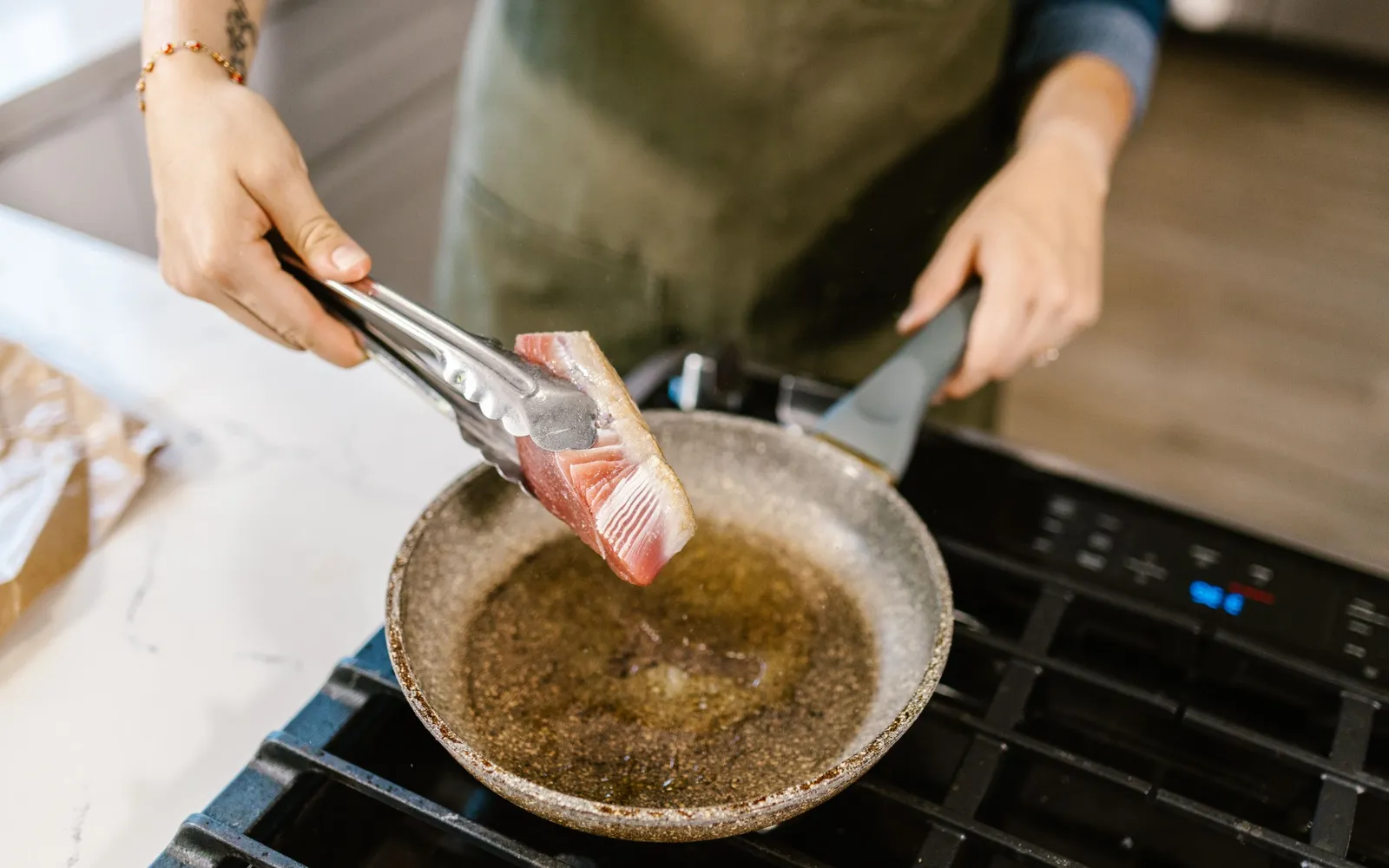
Fond comes from the sear, so everything from the last lesson applies: hot pan, dry food, no crowding. Stainless steel and cast iron make great fond. Nonstick makes basically none, because nothing sticks to it, which is the entire point of nonstick and also its tragic flaw.
One rule: brown is good, black is not. If the bits are burnt, the sauce will taste burnt. No amount of butter can save you. Wipe it out and make peace with it.
2. Pour off the extra fat
After you pull the meat out to rest, tilt the pan and pour off most of the fat, leaving about a tablespoon. Too much fat and your sauce will be greasy and break. The fond stays stuck to the pan, so don’t worry about losing it.
3. Add aromatics
Lower the heat to medium and add a minced shallot, maybe some garlic. Stir for about a minute until it softens and smells like you know what you’re doing. The moisture from the shallot starts loosening the fond for you, which is very considerate of it.
4. Deglaze
Now pour in some liquid and watch the magic. Wine, stock, a splash of brandy, cider, even water in a pinch. It’ll hiss and steam dramatically, and as it does, scrape the bottom with a wooden spoon. The fond dissolves into the liquid, and that liquid is now your sauce. You’ll feel like a wizard. You’re basically a wizard.
(If you’re using brandy or anything boozy over a gas flame, pull the pan off the heat before you pour. Eyebrows are surprisingly slow to grow back.)
5. Reduce
Let it simmer until it’s reduced by about half and looks a little syrupy. This is where the flavor concentrates. Add any juices that have collected under the resting meat, because those are flavor too and they’re just sitting there.
Hold off on salt until the end. Reducing concentrates everything, including salt, and a sauce that tasted perfect at the start can taste like a salt lick by the time it’s done.
6. Mount it with cold butter
Take the pan off the heat and swirl in a few cubes of cold butter, one at a time, until the sauce turns glossy and slightly thick. The French call this monter au beurre, which sounds fancy but just means “add butter, obviously.” The butter emulsifies into the sauce, giving it body and that restaurant shine.
Keep it off direct heat. If it boils after you add the butter, the emulsion breaks and you get a greasy puddle instead of a silky sauce. Low and gentle. Treat it like a houseguest who’s had a long flight.
7. Taste and finish
Now salt, pepper, maybe a squeeze of lemon or a splash of vinegar if it tastes heavy or flat. Fresh herbs if you’ve got them. Spoon it over the meat and accept the compliments.
The formula, so you can stop following recipes
Fat poured off. Aromatic in. Liquid to deglaze. Reduce. Cold butter off the heat. Acid to finish. That’s it. Change the liquid and the aromatic and you have a different sauce every night: shallot and red wine for steak, garlic and white wine for chicken, apple cider and mustard for pork. You will never need a jar of anything again.
That last-minute squeeze of lemon, by the way, is doing more work than you think. That’s next.